
BBC Derangement Syndrome
Another victory for the deranged as they inch towards the goal of demolishing the Corporation

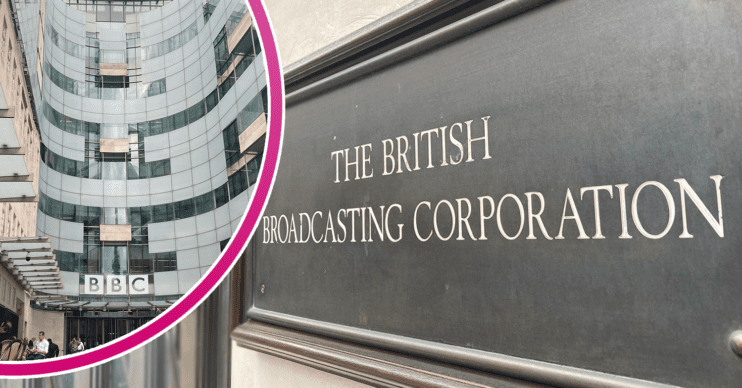
The BBC is a hopelessly bureaucratic organization filled with self-important people, often dysfunctional and yet it is a world beating public broadcaster frequently buffeted by political turbulence.
This week the BBC’s Director General and the head of news were forced to resign, following yet another unceasing barrage of criticism, mainly from the right but also from the Starmer government which is, at least ostensibly, left wing.
Criticism of the BBC is something of a national pastime, not least because it is the station of choice for most people in Britain, making it an integral part of British life.
Indeed the BBC is so much part of people’s lives that its relationship with the public is akin to family relationships which are not unknown to have equal dollops of love and hate. Everyone has an opinion about the BBC and rightly so because as the nation’s public broadcaster it belongs to everyone.
For as long as I can remember (in other words, far too long) it has been intensely disliked by most other media outlets, who whine about unfair competition and bias, largely meaning that it often reflects views other than their own.
Many right wing politicians are in such a tizzy about the BBC as to be showing signs of BBC Derangement Syndrome. They have convinced themselves that the Corporation is a hotbed of left wing radicalism, immersed in woke and far too London-centric or Islington-centric to be precise.
The BBC rarely helps itself by smugly proclaiming that it must be getting things right because it also gets plenty of flack from the left which accuses it of reflecting establishment thinking and over-compensating for fears of left wing bias by giving endless airtime to rabid right wingers (aka Nigel Farage).
The hallowed ground of impartiality that the BBC claims to occupy is largely illusory because both news and entertainment is diminished by a relentless search for a perfect middle ground that ends up being a vapid mush of nothingness.
Even though beige is evidently the BBC’s bosses favourite colour, beige doesn’t cut in the world of furious division.
Few news stories attract more partisanship than those relating to the war in Gaza. There is absolutely no way of satisfying the strongest proponents on both sides of this argument who relentlessly examine every word for bias and take deep offence at more or less anything that fails to reflect their very fixed views. Indeed in the recent furor, BBC Arabic has become the focus of particular rage, fueled almost entirely by people who do not speak a word of Arabic and therefore have only secondhand access to its output.
However the main cause of the current outburst seems highly concocted, even by the dismal standards of what passes for debate about the BBC. This is because it pivots around the idea that Donald Trump’s infamous speech to protestors did not fuel the 6 January 2021 insurrection on Capitol Hill. The speech in its totality is rightly seen as an incitement to riot even though on the one hand the Orange Blob was covering his backside by talking about legal activity, while on the other firing up the mob.
The problem is that some idiot at the Panorama news programme spliced together two parts of this speech without making it clear that they were spoken at different times. It was not just stupid but pointless because all the evidence of what happened back then and subsequently leaves little space for doubt as to the Blob’s intention. No wonder the White House is in fall battle mode threatening a $1bn law suit unless the BBC bows to its bullying.
The details of how this arose are less important than the fuel it supplied to the BBC’s dedicated enemies who will take whatever mistakes the Corporation makes to draw much bigger conclusions about its irredeemable uselessness.
What they really dislike about the public broadcaster is that it does not reflect their views on the news while in entertainment, goodness knows what they want, but I imagine they yearn for the days when a posh voice came out of the speakers announcing the start of Listen with Mother.
The BBC is paddling uphill in its battle with implacable critics. It thinks that meekly repeating ‘we are impartial’ will do the trick. Why not be honest and be clear that perfect balance in news reporting is almost impossible? Why not be less timid in asserting the absolutely astonishing treasure trove of really good programming that comes out of the BBC. Sure, there is also dross but given the extent of its output, this is hardly surprising.
And, while most of the discontent around the BBC focuses on its domestic services, the even more influential BBC World Service reaches some 450 million people per week. In the USA the BBC is the second most trusted news source, trailing a weather channel.
Yet shriveling the World Service is a particular obsession of its opponents. They have no idea of its value to British soft power and no conception of the lifeline that BBC foreign language services throws to people living in nations without freedom of expression.
People overseas simply cannot understand why there is such a fervent desire to destroy this pearl, even though like most pearls, it has its flaws.
That famous thing that Winston Churchill said about democracy being the worst form system of government except for all the others, also applies to the BBC which can be a quite terrible broadcaster but is far better than most others, and, by the way, more trusted than others.
so no comment on the incorrect BBC reports on Gaza?